

Is your culture a "Safe Zone" or a "Stress Zone"?
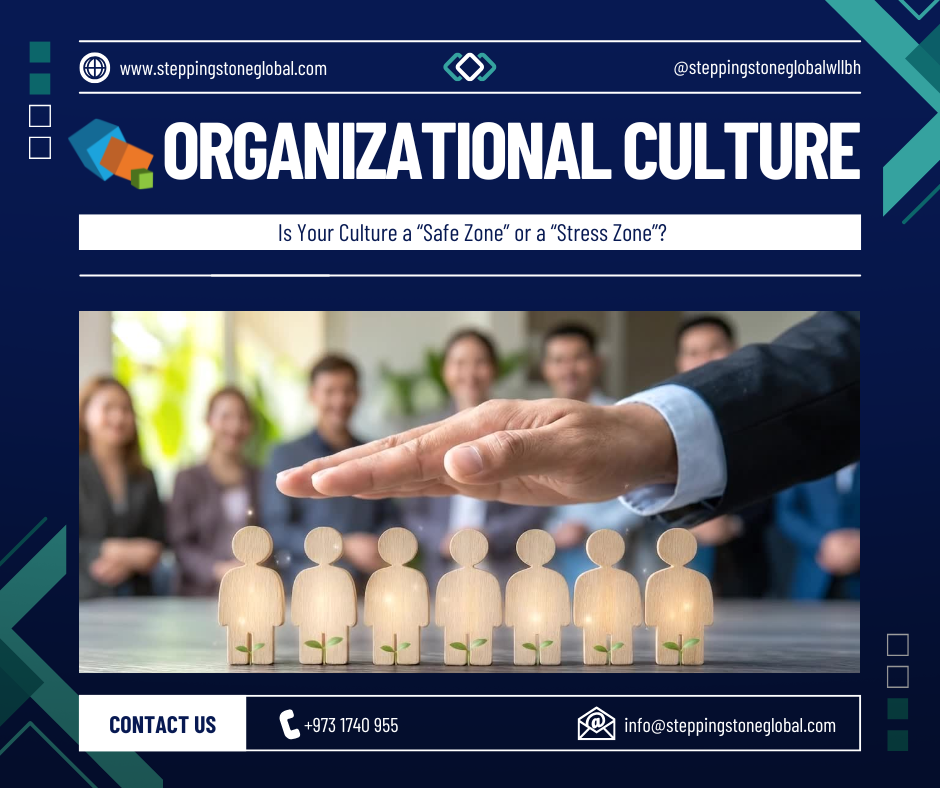
In the high-stakes corporate landscape of 2026, the line between a "high-performance" environment and a "high-pressure" one has become increasingly blurred. For many leadership teams, the result is a culture that feels less like an incubator for innovation and more like a pressure cooker for burnout. The question every leader must ask is simple: Is our culture a "Safe Zone" or a "Stress Zone"?
The Stress Zone: The Silent Performance Killer
A "Stress Zone" isn't always characterized by shouting or chaos. More often, it is defined by silence. In these cultures, the primary motivator is fear—fear of looking incompetent, fear of reprisal, or fear of making a mistake. When employees operate in a Stress Zone, their brains shift into survival mode. Creative thinking shuts down, and "covering one's tracks" becomes more important than solving the problem.
Signs you are in a Stress Zone:
Finger-pointing (Blame, Excuse, and Denial): Mistakes are met with "Who did this?" rather than "How do we fix this?"
Information Silos: Teams hoard data to protect their own status.
Quiet Meetings: No one challenges the status quo or asks the "difficult" questions.
The Safe Zone: Psychological Safety as a Multiplier
Contrary to popular belief, a "Safe Zone" is not about being "nice" or lowering standards. It is about Psychological Safety—the belief that one will not be punished or humiliated for speaking up with ideas, questions, concerns, or mistakes.
In a Safe Zone, accountability is actually higher. Because people aren't afraid to admit failures early, those failures are corrected before they become expensive disasters. Innovation thrives because the "cost" of a bad idea is zero, while the potential reward for a breakthrough is infinite.
The Safe Zone Advantage:
Solution-Oriented Communication: Moving the dialogue from "Who is at fault?" to "How do we move forward?"
Silo-Busting Teamwork: Eliminating barriers to create a truly integrated workforce.
Adaptive Intelligence: Converting insights into impact; ensuring people don't just survive change, but intentionally lead through it.
The Verdict: Culture is Your Stabilizer
As we navigate a volatile business landscape, your organizational culture acts as your stabilizer. A Stress Zone culture will eventually crack under the weight of external pressure. A Safe Zone culture, however, uses that pressure to forge stronger bonds and better solutions.
True leadership isn't about removing the stress of the workplace; it’s about ensuring that your internal culture remains a "Safe Zone" where your team has the psychological room to breathe, innovate, and lead.