

How Adaptive Intelligence Transforms Insight into High-Impact Performance
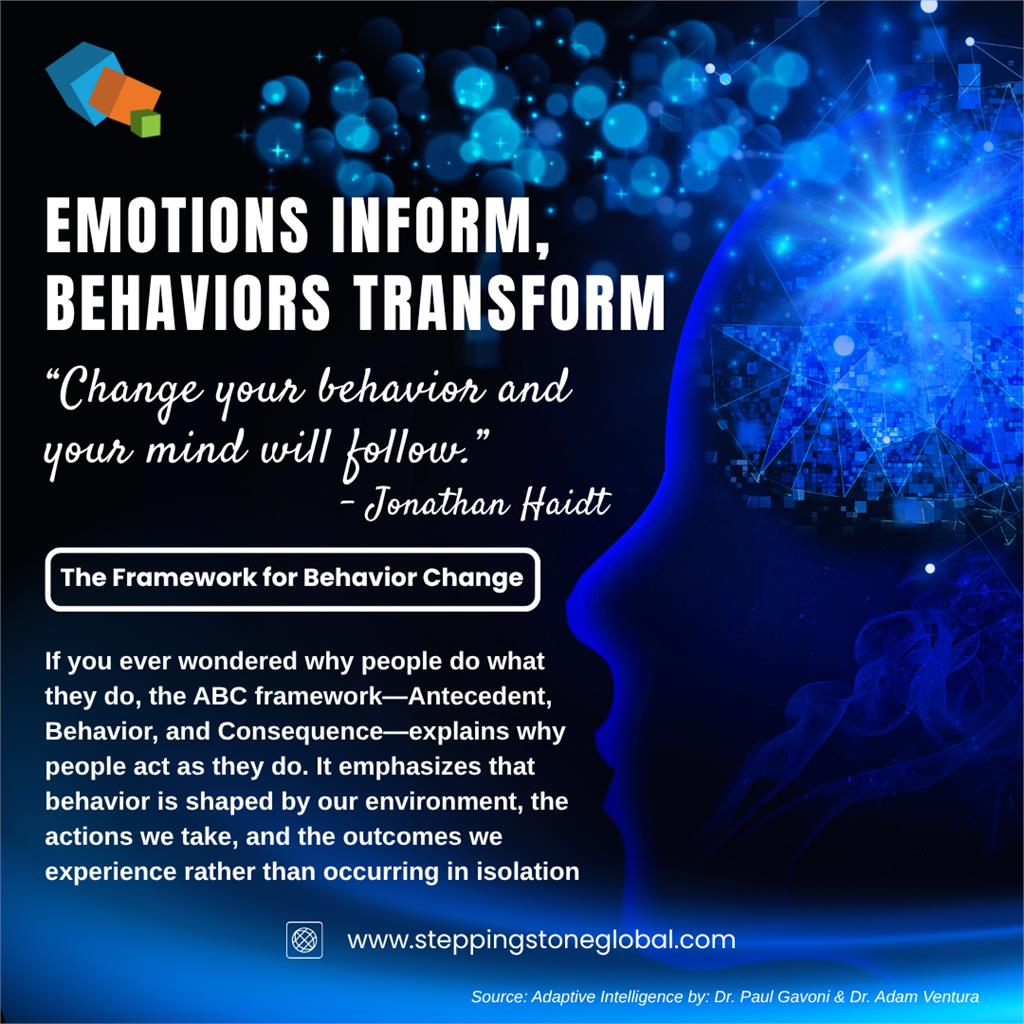
In today’s volatile business landscape, organizational survival is defined by strategic agility rather than scale or legacy. Success hinges on our ability to adapt to complex social and professional shifts, aligning collective behaviors with corporate values to drive meaningful results. Historically, our ancestors survived by reading environmental cues to find resources, avoid danger, and build alliances. In the modern corporate ecosystem, the "environment" is defined by market signals, cultural nuances, and competing priorities. Thriving in this complexity requires more than just instinct—it demands behavioral precision guided by Adaptive Intelligence. This is the ability to move beyond reactive habits toward intentional, data-informed actions that serve a long-term vision.
As defined by Dr. Paul Gavoni and Dr. Adam Ventura, Adaptive Intelligence (AQ) is the strategic capacity to identify patterns of emotional behavior, understand their root causes, and recalibrate actions to navigate systemic change. It serves as the critical bridge between Emotional Intelligence (EQ) and Behavioral Science. While EQ focuses on internal states, the framework developed by Gavoni and Ventura recognizes that emotions manifest as observable behaviors. By decoding these behaviors and understanding how the environment reinforces them, leaders can turn internal insights into external, high-impact performance
Rooted in the science of consequences and the evolutionary lens of adaptability, Adaptive Intelligence equips individuals and organizations with the tools to transform complex challenges into catalysts for growth. It moves the needle from mere resilience to proactive thriving—ensuring that in an ever-changing environment, the organization remains aligned, agile, and results-oriented.
Ultimately, this approach operates on a singular, powerful truth: Emotions inform, but behaviors transform.