

Three Habits that make or break Leaders and Elevate Organizational Performance
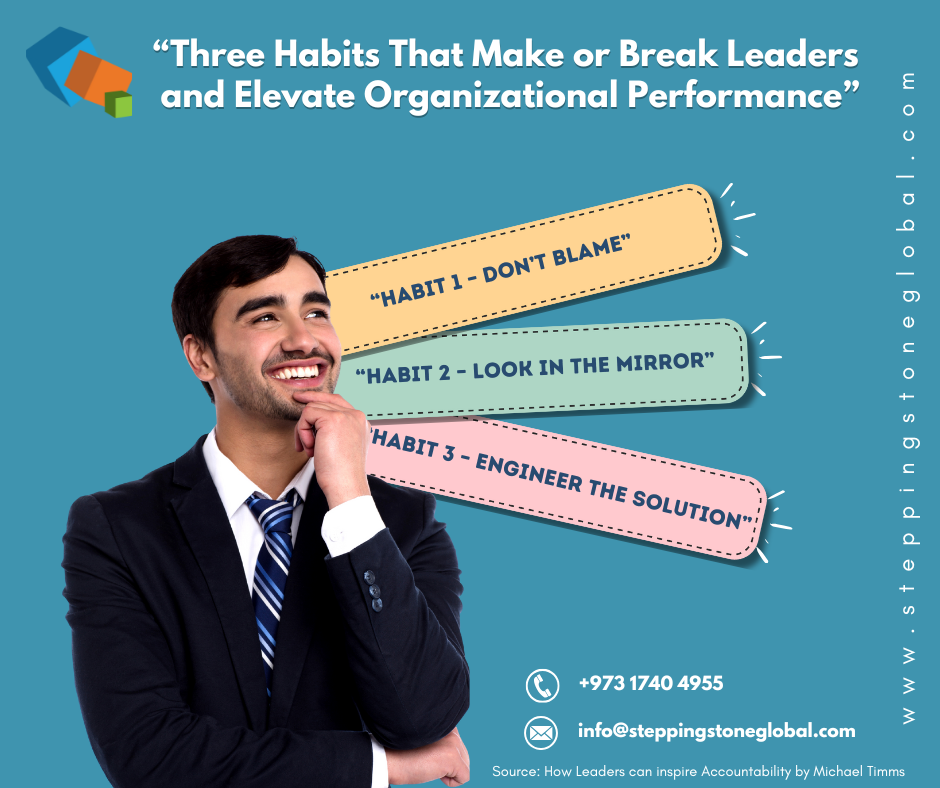
As someone deeply involved in fostering effective leadership, particularly through our work with our clients, I recently had the pleasure of delving into Michael Timms’ insightful book, “How Leaders Can Inspire Accountability - Three Habits That Make or Break Leaders and Elevate Organizational Performance”
What really resonated with me was the strong parallel between Timms' approach and our fundamental beliefs in Leadership Development. It wasn't just a book I read; it felt like a conversation with a kindred spirit on a topic critical to today's organizational success
Timms challenges the traditional, often punitive view of accountability. He skillfully shifts the narrative from one of blame and fear to one rooted in personal commitment and a shared sense of ownership. This redefinition is not merely semantic; it’s fundamental to building a robust, resilient, and truly high-performing culture. And in this critical shift, I found myself nodding in vigorous agreement, recognizing the very principles we advocate for at SteppingStone Global
I firmly believe that true leadership cultivates an environment where individuals don't just understand their responsibilities but passionately own them. This vision is precisely what Timms lays out, centering on three fundamental habits that leaders must implement
1. Don't Blame:
- The Habit: This is about moving beyond simply identifying who or what is at fault when things go wrong. It encourages leaders and team members to shift their focus from finger-pointing to understanding the underlying causes of problems
- Impact: By eliminating blame, leaders create psychological safety. This allows individuals to be honest about challenges, admit mistakes without fear of punitive action, and direct energy towards solutions rather than self-protection. It prevents a culture where people hide problems
2. Look in the Mirror:
- The Habit: Once the blame game is removed, the next step is for individuals (including leaders) to honestly assess their own contribution to any given situation, whether it's a success or a failure. This involves self-reflection and asking, "What role did I play? What could I have done differently?"
- Impact: This habit fosters personal responsibility and self-awareness. It empowers individuals to take ownership of their actions and their impact on outcomes, recognizing that they often have more control or influence than they initially perceive. For leaders, it means owning their leadership role in team performance
3.Engineer the Solution:
- The Habit: This is the action-oriented habit. Instead of dwelling on problems or past failures, individuals and teams are encouraged to proactively brainstorm and implement solutions. It’s about focusing energy on what can be done to improve the situation and prevent recurrence
- Impact: This habit cultivates a proactive, problem-solving mindset. It channels energy into constructive action, driving continuous improvement and ensuring that lessons learned from challenges are translated into tangible improvements. For leaders, it means guiding teams towards practical steps and providing the necessary support
My reading of "How Leaders Can Inspire Accountability" reaffirmed a powerful truth: that leaders genuinely inspire accountability by deliberately moving beyond a fear-based, blame-centric approach. The path to high performance is paved with trust, clarity, personal ownership, and a relentless commitment to continuous development. This isn't merely a strategic choice; it is the indispensable foundation for achieving profound organizational success and building resilience in an ever-changing world. It’s about cultivating a culture where every individual feels truly invested, not just in their tasks, but in the collective triumph of the organization
SteppingStone Global is dedicated to empowering leaders and organizations to embed these transformative habits, fundamentally reshaping their cultures and elevating performance